


By Earl Bousquet
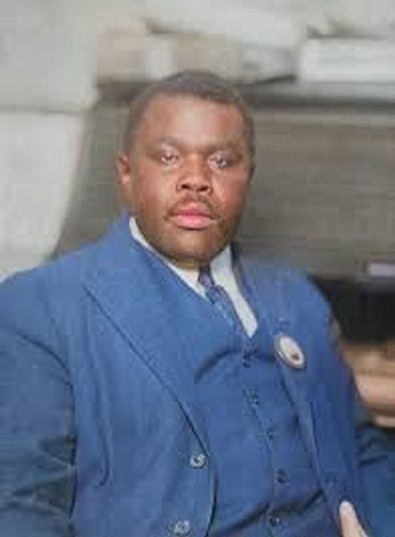
Garvey was the first to issue a call for a special day for Black people and is also regarded as having ignited the last big flame in the 20th Century struggle for recognition of the equality of Blacks in the USA, the Caribbean and the world.
Born on August 17, 1887, Garvey would’ve been 138-years-old last Sunday; and October 17, 2025 will mark the 89th anniversary of his only visit to Saint Lucia -on that date in 1936.
From humble West Indian beginnings, he built the biggest-ever organized mass movement of Black People (People of African Descent) -based in the US and with roots around the world in Africa, the Caribbean, Latin America, Europe and Canada.
The Universal Negro Improvement Association (UNIA) and African Communities League (ACL), with branches in most English-speaking West Indian colonies and territories, from Jamaica to Saint Lucia to Guyana, comprised eleven million (11,000,000) members worldwide.
The UNIA offered people of African descent the world over a sense of value, hope and pride, as Garvey learned, taught and preached African history in ways that ensured people of all races understood, encouraging Blacks to fight for their rights and instilling fear in Whites who considered Blacks inferior.
In 1920 he declared himself the Provisional President of Africa, adopting the plumed-hat military uniform that attracted both praise and criticism, but more admiration than condemnation from his faithful followers worldwide, including Saint Lucia and other European colonies in the West Indies.
Garvey was one of the first global leaders to say Jesus Christ was Black.
An online article by David Van Leeuwen notes: ‘Garvey’s black nationalism blended with his Christian outlook rather dramatically when he claimed that African Americans should view God «through our own spectacles.»’
He also held that ‘If whites could view God as white, then blacks could view God as black.’
In 1924, the UNIA’s convention in Harlem canonized Jesus Christ as a «Black Man of Sorrows» and the Virgin Mary as a «Black Madonna.»
Garvey’s Saint Lucia visit was part of his unending international mission to encourage self-sufficiency among Black people everywhere. He encouraged supporters across the colonial region to establish their own businesses, leading the way in the USA with the Black Star Line, a shipping company to promote cross-Atlantic trade and travel between Africa and Africans in The Americas and the West Indies.
The regional tour allowed him to preach the word of Black Consciousness to people whose grand-parents were kidnapped and transplanted to this part of the world by Europe through Chattel Slavery, treated like insured cargo during the so-called Middle Passage of the misnamed Great Triangle.
Garvey delivered nightly lectures at the historic Clarke’s Cinema in Castries (which still stands today as the S&S Building on Micoud Street in Castries). The society hall named after him still stands in Choiseul; and the home of the president of the local chapter of the UNIA, Wilberforce Norville, also still stands in Castries.
Snippets of Garvey’s Saint Lucia visit are inscribed in newspaper reports at the Archives Authority and the Central Library, but while much has been said, still very little is written.
Long before the internet was invented, this writer conducted a lengthy interview with Mrs Lilian Norville (wife of local UNIA President Wilberforce Norville) at her Hospital Road, Castries home, where Garvey spent time before his well-attended nightly lectures at the cinema.
Garvey spoke eloquently, wrote fearlessly and was also a brilliant poet who found the words to paint the mental images that would help break the mental slavery still shackling Black people’s brains 100+ years after the trans-Atlantic slave trade was officially declared as abolished.
His life was an endless chapter in the continuing story of the everlasting struggles of People of African Descent, which is also at its highest level of organization at this point.
Like with every other leading Black liberation advocate in the USA before and after him, Garvey was hounded by Federal agents under the leadership of the notorious J. Edgar Hoover. Hoover haunted and hunted him just like he did later to Martin Luther King, Malcolm X, Stokely Carmichael (Kwame Ture) and all other radial leaders of the Black Rights movement, young and old often subjected to open harassment and in many cases arrested and convicted on trumped charges.
Hoover’s secret agents fabricated love letters to suggest infidelity on Garvey’s part and also got some Blacks to allege he was ‘stealing their money’ with the Black Star Line. Eventually, Hoover’s agents arrested and charged Garvey in 1922 for supposed ‘mail fraud’ and he was convicted and jailed, then deported to Jamaica, later leaving for London, where he eventually died in 1940, aged 52.
The Mosiah left a legacy too large to draw or paint, far-less write.
Last October, a 40-minute feature film on Garvey entitled ‘Mosiah’ was unveiled in Jamaica and the President of the Jamaica UNIA Chapter, Steven Golding, visited Saint Lucia a few days later for a screening of the movie at the UWI Global Campus at Morne Fortune.
Golding is again planning to visit Saint Lucia in October to commemorate the 89th anniversary of Garvey’s visit to the island -and to again screen the movie- as part of early observances of the UN’s Second Decade for People of African Descent, which Garvey called for in 1921.
Saint Lucians will get another chance to interact with Golding, who, in a recent interview with Television Jamaica (TVJ) to commemorate Garvey during Emancipation Day in 2025, noted that “Emancipation Day is more than just a holiday…”.